
By Mitu Rani Das, Tech Enthusiast | February 17, 2026
When I first heard about Snapdragon 8 Elite Gen 6 and its upcoming Pro variant, I realized we are finally stepping into a new era of mobile computing. This is not just another yearly upgrade. Qualcomm’s strategy with these chips signals real performance tiering, more advanced AI, stronger graphics, and a shift in how smartphone silicon is positioned globally, which matters a lot for tech buyers here in Bangladesh.
In this deep dive, I will break down everything about Snapdragon 8 Elite Gen 6: its architecture, performance potential, why there are two variants, how it compares to competitors, and what this means for people choosing phones in Bangladesh in 2026. I will also include information from credible sources, such as Gizmochina and Android Headlines, to ensure accuracy and reliability.
What Snapdragon 8 Elite Gen 6 Really Is
The Snapdragon 8 Elite Gen 6 is Qualcomm’s next flagship mobile chipset, expected to power premium Android phones launching throughout 2026. It replaces the Snapdragon 8 Elite Gen 5 and introduces major performance and architectural changes.
Here is what makes it exciting:
-
It is built on TSMC’s advanced 2nm semiconductor process, giving it better efficiency and performance compared to older 3nm chips.
-
Qualcomm is releasing two variants: a standard Snapdragon 8 Elite Gen 6 and a premium Snapdragon 8 Elite Gen 6 Pro.
-
Both variants focus on next-generation AI, graphics, and system performance.
This two-tier flagship strategy is something we have seen on desktops for years with chips like Intel Core i5/i7 or AMD Ryzen 5/7 lines, but it is new for mobile silicon. The approach allows manufacturers to differentiate real performance levels instead of locking all flagships on the same hardware.
Why 2nm Manufacturing Is a Big Deal
Manufacturing on a 2nm process changes how much power and efficiency a chip can deliver.
In simple terms:
-
More transistors in the same space mean more computing power.
-
Improved power efficiency extends battery life and reduces heat.
-
It creates room for bigger AI, CPU, and GPU blocks without sacrificing thermal control.
According to multiple industry reports, Snapdragon 8 Elite Gen 6 is expected to use TSMC’s advanced 2nm node, likely the N2P variant, which is a meaningful step up from the 3nm nodes used in most current mobile flagship chips, as noted by Android Headlines.
This matters in real usage, allowing longer gaming sessions with less throttling, better AI performance, and improved battery life during multitasking such as editing 8K videos or running multiple apps at once.
Standard vs Pro: What Is the Difference?
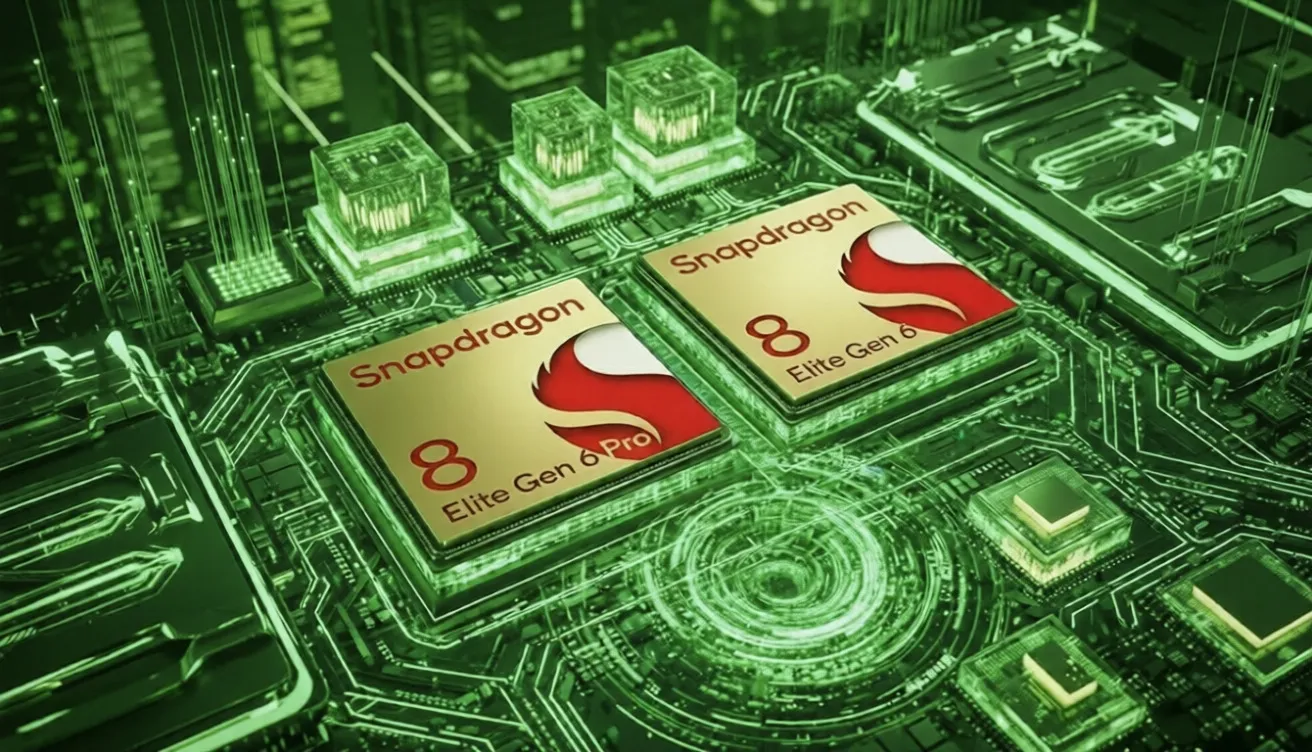
One of the biggest changes for Snapdragon 8 Elite Gen 6 is that Qualcomm appears ready to offer two distinct versions.
Standard Snapdragon 8 Elite Gen 6
-
Highly capable flagship performance level
-
Expected to use LPDDR5X memory
-
Efficient power usage
-
Suitable for most power users
-
Likely to appear in the majority of flagship Android phones
Snapdragon 8 Elite Gen 6 Pro
-
Premium flagship designed for ultimate performance
-
Expected to support LPDDR6 memory for higher bandwidth
-
Stronger GPU configuration for sustained heavy graphics workloads
-
Likely support for UFS 5.0 storage
-
Reserved for top-tier smartphones with advanced cooling
Both chips share the same base architecture, but the Pro version pushes performance farther with faster memory and storage support and potentially higher clock speeds. This concept is similar to how desktop and laptop processors have performance tiers.
CPU and GPU: What You Can Expect
CPU
The Snapdragon 8 Elite Gen 6 family is expected to use a 2+3+3 core architecture:
-
2 ultra-performance cores for demanding tasks
-
3 performance cores for multitasking and background processing
-
3 efficiency cores for light tasks and energy conservation
This balance allows the chip to be powerful when needed and efficient during everyday use. In real usage, this translates to smooth gaming experiences, fast app switching, better multitasking without battery drain, and quicker responsiveness in AI and computational tasks.
GPU
Graphics performance is where the Pro variant stands out. With LPDDR6 memory and higher bandwidth, the Pro version is expected to sustain better frame rates in demanding games and graphics-intensive applications. For example, games like Genshin Impact or PUBG Mobile at ultra settings should feel smoother and more stable over time compared to previous chips.
Even the standard Snapdragon 8 Elite Gen 6 chipset promises strong GPU performance, but the Pro’s higher memory speed and bandwidth gives it a significant advantage in heavy graphics workloads.
AI Capabilities: On-Device Smart Performance
One of the most exciting areas of Snapdragon 8 Elite Gen 6 is its AI capabilities. Smartphones are no longer just hardware for calling or browsing. They are becoming AI computers you carry in your pocket.
With this generation:
-
Real-time translation and voice assistance will become faster
-
On-device AI tasks like text generation and language models will run locally
-
Photo and video enhancements, such as computational HDR or AI-driven filters, will become quicker and more accurate
This shift reduces reliance on cloud processing, enhances privacy, and improves response times for intelligent features.
Memory and Storage: LPDDR6 and UFS 5.0
Memory and storage standards play a significant role in real performance.
LPDDR6 Memory (Expected on Pro variant)
LPDDR6 provides:
-
Higher memory bandwidth
-
Better energy efficiency during heavy tasks
-
Faster data transfer between CPU, GPU, and AI engines
This is particularly beneficial for large games, AI processing, and high-resolution video editing.
UFS 5.0 Storage
Both variants are expected to support UFS 5.0 storage, which offers faster read and write speeds compared to earlier storage standards. This helps with faster boot times, quicker app installation and loading, large file transfers, and better overall system responsiveness.
Together, high-speed memory and storage significantly enhance user experience, especially in professional and creative mobile workflows.
Thermal Management and Battery Life
Managing heat is a major challenge with high-end mobile chips. Performance often comes with higher power usage, and efficient thermal control is critical.
Snapdragon 8 Elite Gen 6 series appears designed to balance performance and thermals. The 2nm process provides better efficiency, and Qualcomm’s internal power management optimizes usage based on workload. Smartphone manufacturers are likely to pair the Pro variant with advanced cooling systems such as vapor chambers and graphite layers.
For users in Bangladesh who often use phones for long hours of gaming, videos, and multitasking, this is important because it ensures sustained performance without significant battery drain.
Battery life is expected to improve overall because of efficiency gains from the new architecture and memory management.
Real-World Experience: What This Means for You
For everyday usage in 2026:
Gaming: High-end games with advanced graphics will run smoothly, especially on the Pro variant.
Photography and Videography: Advanced AI and faster image processing will improve low-light results, speed up photo processing, and provide real-time video enhancements.
Productivity and Creativity: Editing videos, working with documents, and multitasking multiple apps will be smoother. AI-enhanced features will speed up workflows.
Battery and Heat: Users can expect better battery life during heavy use and fewer moments of overheating.
Comparison with Competitors in 2026
Snapdragon 8 Elite Gen 6 will compete with other flagship processors:
Apple A-Series chips continue to excel in single-thread performance and efficiency. Snapdragon’s two-tier strategy gives Android users choice based on performance needs and price.
MediaTek Dimensity flagship chips are also competitive, particularly in Android mid-to-upper tier phones. Snapdragon’s focus on AI and tiered performance may give it an edge in flagship differentiation.
This competition benefits users by pushing innovation and providing better choices.
Expected Devices and Market Impact in Bangladesh
Phones powered by Snapdragon 8 Elite Gen 6 and its Pro variant are expected to launch across multiple brands in 2026, including Samsung, Xiaomi, Vivo, Oppo, and OnePlus.
-
Standard Snapdragon 8 Elite Gen 6 phones will dominate mid-premium and high-end markets.
-
Pro variant phones will be limited to ultra-premium flagship models with higher prices.
-
Import costs and advanced hardware may make Pro-powered phones more expensive locally, but the performance gains justify the price for enthusiasts and professionals.
Should You Wait for Snapdragon 8 Elite Gen 6 Phones in Bangladesh?
If you are planning to buy a new flagship phone in 2026 and care about performance, AI features, extended battery life, future-proofing, and advanced mobile workflows, then Snapdragon 8 Elite Gen 6 phones are worth waiting for.
-
If you want the best performance and future-proofing, choose a phone with Snapdragon 8 Elite Gen 6 Pro.
-
If you want great flagship performance at a strong price, choose a phone with standard Snapdragon 8 Elite Gen 6.
Final Thoughts
Snapdragon 8 Elite Gen 6 represents a meaningful step forward in mobile computing. Qualcomm is making performance tiering a reality, improving AI capabilities, graphics performance, and real-world responsiveness. For consumers in Bangladesh, this means better choices, stronger future-proofing, and phones that can handle demanding tasks.
Snapdragon 8 Elite Gen 6 will define how we think about flagship Android phones in 2026. Whether you are a gamer, videographer, multitasker, or someone who just wants a fast and responsive phone, there is a lot to look forward to.
Frequently Asked Questions About Snapdragon 8 Elite Gen 6
What is Snapdragon 8 Elite Gen 6 and why is it important?
Snapdragon 8 Elite Gen 6 is Qualcomm’s 2026 flagship chipset with 2nm process, advanced AI, and enhanced GPU for faster apps, gaming, and professional mobile workflows.
What is the difference between Snapdragon 8 Elite Gen 6 and Pro?
The Pro variant offers LPDDR6 memory, stronger GPU, and UFS 5.0 storage, while the standard version uses LPDDR5X and slightly lower GPU for a more affordable flagship option.
Which smartphones in Bangladesh will use Snapdragon 8 Elite Gen 6?
Top brands like Samsung, Xiaomi, Oppo, Vivo, and OnePlus are expected to launch 2026 flagship phones with standard or Pro Snapdragon 8 Elite Gen 6 chips.
Does Snapdragon 8 Elite Gen 6 improve battery life and heat management?
Yes, the 2nm process enhances efficiency, allowing long gaming, AI tasks, and multitasking without excessive heat or battery drain.
How does Snapdragon 8 Elite Gen 6 compare to Apple and MediaTek chips?
It offers tiered performance, strong AI, and graphics for Android, competing with Apple’s A-series for efficiency and MediaTek Dimensity for high-end performance.


